
Mental Health in Primary Schools
Social Stencil
|
|
Social Stencil is a social emotional neuroaffirming curriculum that aligns with the Australian Curriculum (Version 9) and the Victorian Curriculum 2.0. The Social Stencil lesson plans specifically address aspects of achievement standards in the Personal and Social Capabilities learning area across all four elements; self awareness, self-management, social awareness and social management. One specific example of this link is with Social Stencil Lesson 12 which introduces students to a problem-solving strategy which links to the sub-element of decision making under social management.
|
.png)
Friendology
Friendology helps teachers create a community of belonging and kindness through friendship skills. With 8 sessions per stage + a whole year of weekly friendship lessons, students transform into Friendship Ninjas!
 |
 |
 |
 |
|
Friendology for Early Years From naming emotions to calm-down tips, students learn how to go from the Red to the Green-Zone. Our little ninjas learn to be Firefighters, not Firelighters, practising how to Talk-it-Out through role-play with their fuzzy friends from home. |
Friendology for Year 1 From words to scripts, students learn to name their emotions and express their feelings in friendship. From role-play with teddy bears to ninja-style tricks for making new friends, children learn how to create healthy, Green-Zone friendships. |
Friendology for Year 2 Students learn to treat themselves like a bestie and calm big emotions. Through role-play with stuffies, children learn to make new friends and put out their Friendship Fires®. They also learn to tune into their friend’s feelings! |
Friendology for Year 3 Between hurt feelings, following & copying, feeling left-out, students learn how to handle tricky friendship issues. Students learn the difference between Friendship Fires & Mean-on-Purpose behavior, locking in their very own Quick Comeback. |
 |
 |
 |
 |
|
Friendology for Year 4 Students master the Friend-o-Cycle & the Friend-o-Meter! They learn to distinguish between Friendship Fires, Mean-on-Purpose, & Mean-by-Accident moments, addressing issues like up-and-down friends, stealing friends, & unkind jokes. |
Friendology for Year 5 Friendships are a serious topic at this point, so we’re digging deep into those gut-wrenching friendship issues. Groups, gossip, texting, rumours…students learn a framework & language to help them handle the tough stuff + create boundaries. |
Friendology for Year 6 Jealousy, rumours, drama between friends, group chats online, and complicated Friendship Groups are hot topics! Students learn strategies to shift their mindset, helping them get more strategic and navigate difficult choices in friendship. |
Friendology for Years 7 & 8 Friendships are everything at this age, yet they can be complicated & painful. We’re looking at serious topics like parties, rumours, & friendship issues online + dipping into romantic relationships & consent. It’s time to create strong boundaries! |
The Zones of Regulation®
.png) |
The Zones of Regulation is a comprehensive, research-based framework that builds emotional and behavioral regulation skills through a lens of inclusion, accessibility, and science. Grounded in cognitive behavioral theory and designed with real-world application in mind, The Zones gives learners of all ages — and their support networks — a common language and set of tools for understanding and managing emotions.
The Zones of regulation® empowers everyone — from learners to educators, therapists, and families — with tools to improve self-regulation and thrive together. Designed to foster well-being by helping individuals understand and manage their emotions, behaviors, and sensory needs. Sorting Our Emotions Into Four ZonesFeelings are complicated. They come in different sizes, intensities, and levels of energy that are unique within our brains and bodies. To make them easier to talk about, think about, and regulate, The Zones of Regulation organizes our feelings, states of alertness, and energy levels into four colored Zones – Blue, Green, Yellow, and Red. The simple, common language and visual structure of The Zones of Regulation helps make the complex skill of regulation more concrete for learners and those who support them. We learn to regulate our Zones to meet our goals and task demands, as well as support our overall well-being. |
|
|
|
|
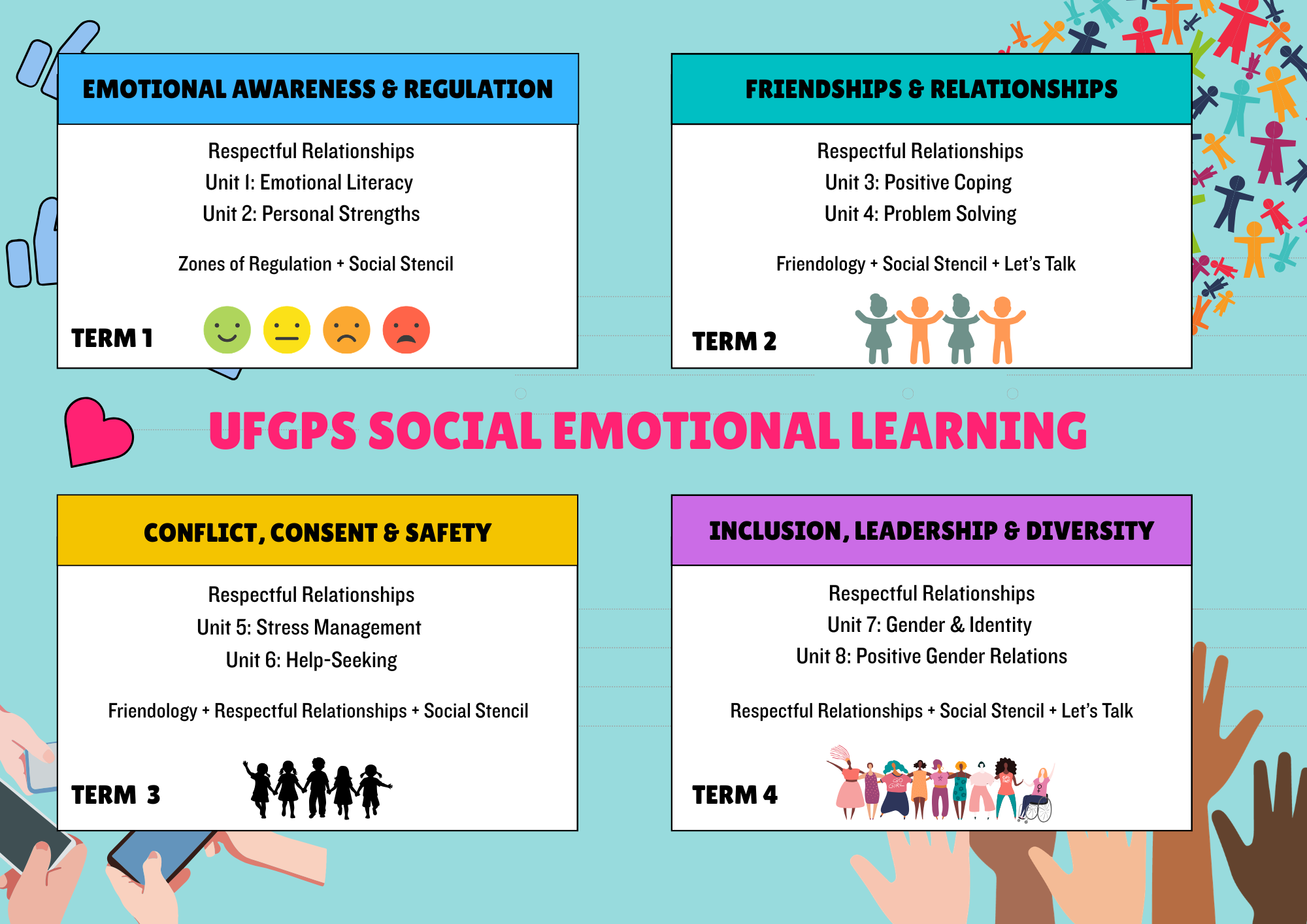
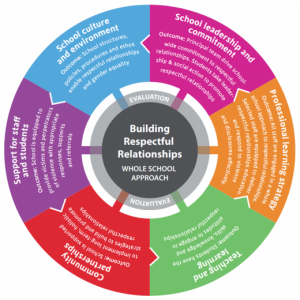
The Resilience, Rights and Respectful Relationships learning curriculum have been designed for teachers in primary and secondary schools to develop students' emotional and positive relationship skills. Efforts to promote social and emotional skills and positive gender norms in children and young people has been shown to improve health related outcomes and subjective wellbeing. It also reduces antisocial behaviours including engagement in gender-related violence.
Taking a whole-school approach is about embedding a culture of respect and gender equality across the entire school community. This approach leads to positive impacts on students’ mental health, classroom behaviour, and relationships between teachers and students.
At Upper Ferntree Gully Primary School, students will investigate the following topics from Foundation to Grade 6. TOPIC 1: EMOTIONAL LITERACY - TOPIC 2: PERSONAL STRENGTHS - TOPIC 3: POSITIVE COPING - TOPIC 4: PROBLEM SOLVINGTOPIC 5: STRESS MANAGEMENT - TOPIC 6: HELP-SEEKING - TOPIC 7: GENDER AND IDENTITY - TOPIC 8: POSITIVE GENDER RELATIONS
|
|
|
|
|
Let's Talk
We cultivate psychological safety in individuals and organisations by instilling character strengths of:
• Courage to challenge social stigma and encourage people to talk
• Compassion to care for self and others by lending an ear and support
• Commitment to empower people, organisations and communities to have a voice and be heard
Why for Students
 |
 |
 |
Why for Teachers
 |
 |
 |